Norway Charts Its Own Course on Arctic Energy
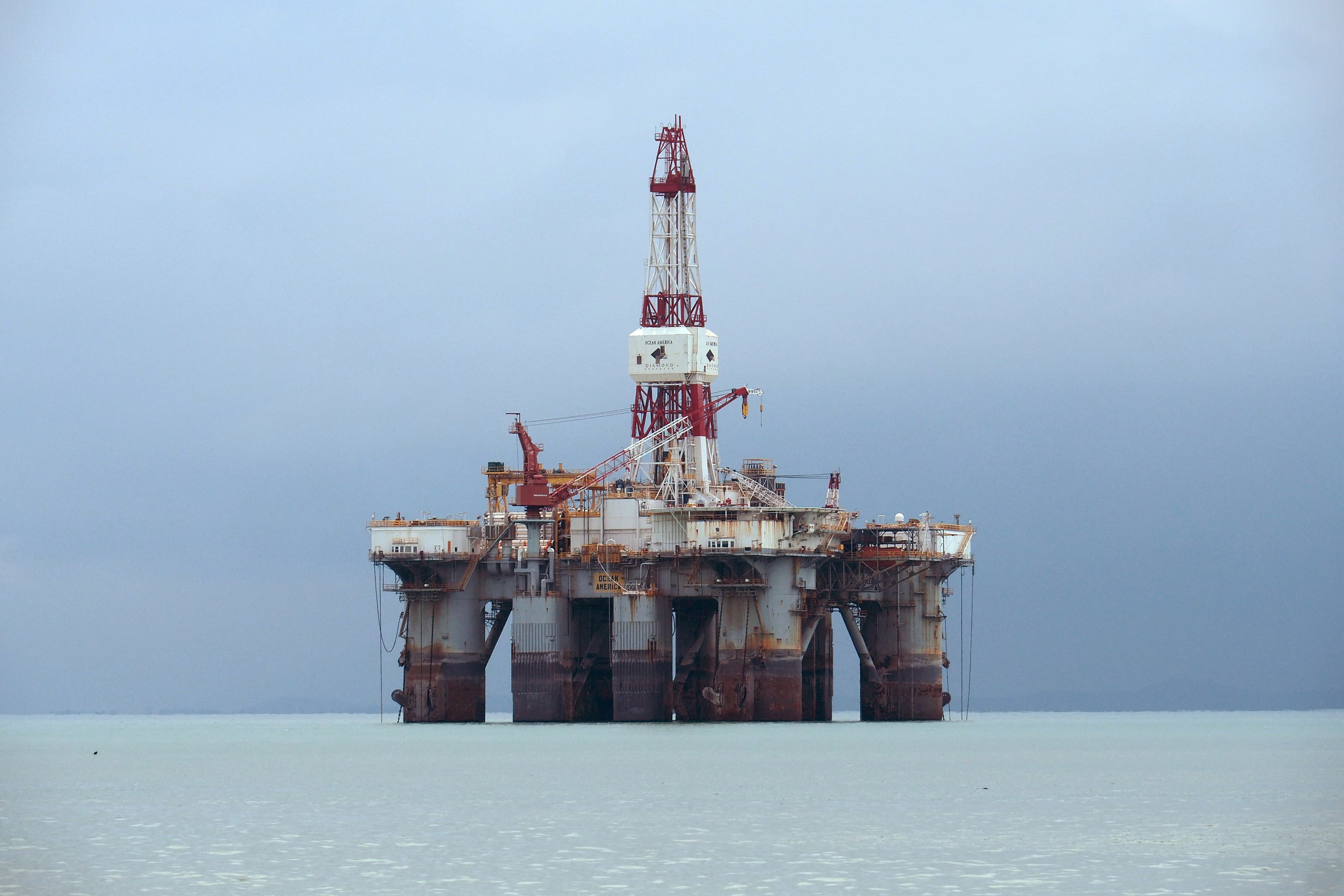
Norway is preparing to move forward with new drilling operations in the Arctic, a decision that places the Scandinavian nation in direct conflict with the broader energy policy framework championed by the European Union. The country's Energy Minister has publicly signaled the government's intent to pursue new extraction activities in the region, drawing attention to a growing divide between Norway's national energy interests and the climate-focused direction of European policy.
The announcement has reignited a long-standing debate about the future of fossil fuel development in environmentally sensitive regions, particularly as the EU continues to push member states and partner nations toward cleaner energy alternatives and away from new hydrocarbon extraction projects.
The EU's Stance on Arctic Fossil Fuel Development
The European Union has increasingly positioned itself as a global leader in the transition away from fossil fuels. Over the past several years, EU institutions have introduced a range of regulatory frameworks and policy objectives aimed at reducing reliance on oil and natural gas, both domestically and in cooperation with trading partners. Central to this agenda is discouraging new investments in hydrocarbon exploration, particularly in ecologically fragile zones such as the Arctic.
The Arctic region is widely regarded by scientists and environmental organizations as one of the most climate-sensitive areas on the planet. Temperatures in the region are rising at a rate significantly faster than the global average, a phenomenon sometimes referred to as Arctic amplification. Against this backdrop, plans to expand drilling operations have drawn sharp criticism from environmental groups and climate policy advocates across Europe.
While Norway is not an EU member state, it maintains close ties with the bloc through the European Economic Area (EEA) agreement and is a major supplier of natural gas to European countries. This relationship makes Norwegian energy policy particularly significant in the context of European energy security and climate commitments.
Norway's Energy Minister Makes the Case for Drilling
Despite the EU's position, Norway's Energy Minister has made clear that the government intends to proceed with plans for new Arctic exploration and extraction activities. The minister's statements represent a firm defense of Norway's sovereign right to manage its own natural resources, a position that has broad political support within the country across multiple parties.
Proponents of the drilling plans argue that Norway's oil and gas sector remains a critical pillar of the national economy, generating significant revenues that fund the country's extensive public welfare system. Norway's sovereign wealth fund, one of the largest in the world, was built largely on revenues from North Sea oil production, and continued investment in energy extraction is viewed by many within the country as essential for maintaining long-term financial stability.
Supporters also contend that Norwegian energy exports, including natural gas, play an important role in European energy security — a point that became especially salient following the disruption of Russian gas supplies to Europe in the wake of the conflict in Ukraine. From this perspective, expanding Norwegian production capacity could help reduce European dependence on less stable or politically complicated energy sources.
Environmental Concerns and International Criticism
The planned Arctic drilling has drawn swift criticism from environmental organizations and climate scientists, who warn that new fossil fuel development in the region is incompatible with the goals set out in the Paris Agreement on climate change. Critics argue that opening new extraction sites in the Arctic sends the wrong signal at a time when global efforts to limit warming to 1.5 degrees Celsius above pre-industrial levels are already facing serious challenges.
Environmental groups have also raised concerns about the specific risks associated with drilling in Arctic waters, where harsh weather conditions, remote locations, and the presence of sea ice can make oil spill response significantly more difficult than in other offshore environments. A major spill in the Arctic could, they argue, cause irreversible damage to one of the world's last remaining pristine marine ecosystems.
Several European governments and international bodies have previously called on Norway to reconsider its approach to Arctic energy development, urging the country to align its policies more closely with shared climate objectives. However, Norwegian authorities have consistently maintained that domestic resource management decisions fall within the country's sovereign jurisdiction.
A Broader Tension Between Energy Security and Climate Goals
The standoff between Norway and the EU over Arctic drilling reflects a broader tension that many governments are grappling with as they attempt to balance immediate energy security needs with long-term climate commitments. The energy crisis triggered by geopolitical instability in recent years has led some countries to revisit earlier decisions to phase out fossil fuel production, complicating the path toward decarbonization.
Norway's situation is particularly complex given its dual identity as both a major fossil fuel producer and a country with one of the highest rates of electric vehicle adoption in the world. The Norwegian government has invested heavily in renewable energy domestically, with the vast majority of the country's electricity generated from hydropower. At the same time, it continues to profit significantly from the export of oil and gas to international markets.
This apparent contradiction has made Norway a frequent subject of debate in international climate discussions, with critics arguing that the country cannot claim environmental leadership while simultaneously expanding its fossil fuel extraction operations. Defenders of Norway's approach counter that the country produces oil and gas under some of the world's strictest environmental regulations and that Norwegian exports help displace higher-emission energy sources elsewhere.
What Comes Next
As Norway moves forward with its Arctic drilling plans, the tension with EU climate policy is unlikely to dissipate in the near term. The decision may prompt further diplomatic exchanges between Oslo and Brussels, and could influence ongoing negotiations over energy cooperation agreements and climate-related trade measures.
For now, Norway appears prepared to stand firm on its right to develop its Arctic energy resources, regardless of the political pressure emanating from European capitals. Whether this stance will ultimately prove sustainable — economically, politically, and environmentally — remains an open question that will likely be answered over the course of the coming years as both Arctic conditions and global energy markets continue to evolve.