A Surprising Ingredient List: Plastic and Straw
In what may sound like a science fiction premise, researchers have developed a technology capable of transforming two seemingly inedible materials — plastic bottles and agricultural straw — into vanilla-flavored biscuits. The process relies on genetically engineered fungi that break down waste materials and convert them into edible compounds, opening a new frontier in both food science and sustainable waste management.
The innovation represents a significant step forward in efforts to find practical uses for plastic waste and agricultural byproducts, both of which accumulate in enormous quantities worldwide each year. Rather than allowing these materials to sit in landfills or be incinerated, scientists are exploring how biology can bridge the gap between industrial waste and human consumption.
How the Process Works
At the core of this technology are genetically modified microorganisms — specifically fungi — that have been engineered to metabolize substances found in common plastics, such as polyethylene terephthalate (PET), as well as lignocellulosic biomass derived from plant material like cereal straw. Through a series of biochemical reactions, these fungi break down complex molecular structures into simpler organic compounds.
One of the key outputs of this microbial process is vanillin, the primary chemical compound responsible for the characteristic flavor and aroma of vanilla. Vanillin is already widely used in the food industry as a flavoring agent, and its production through biological means from waste materials could significantly reduce the industry's dependence on petroleum-based synthetic vanillin or resource-intensive natural vanilla cultivation.
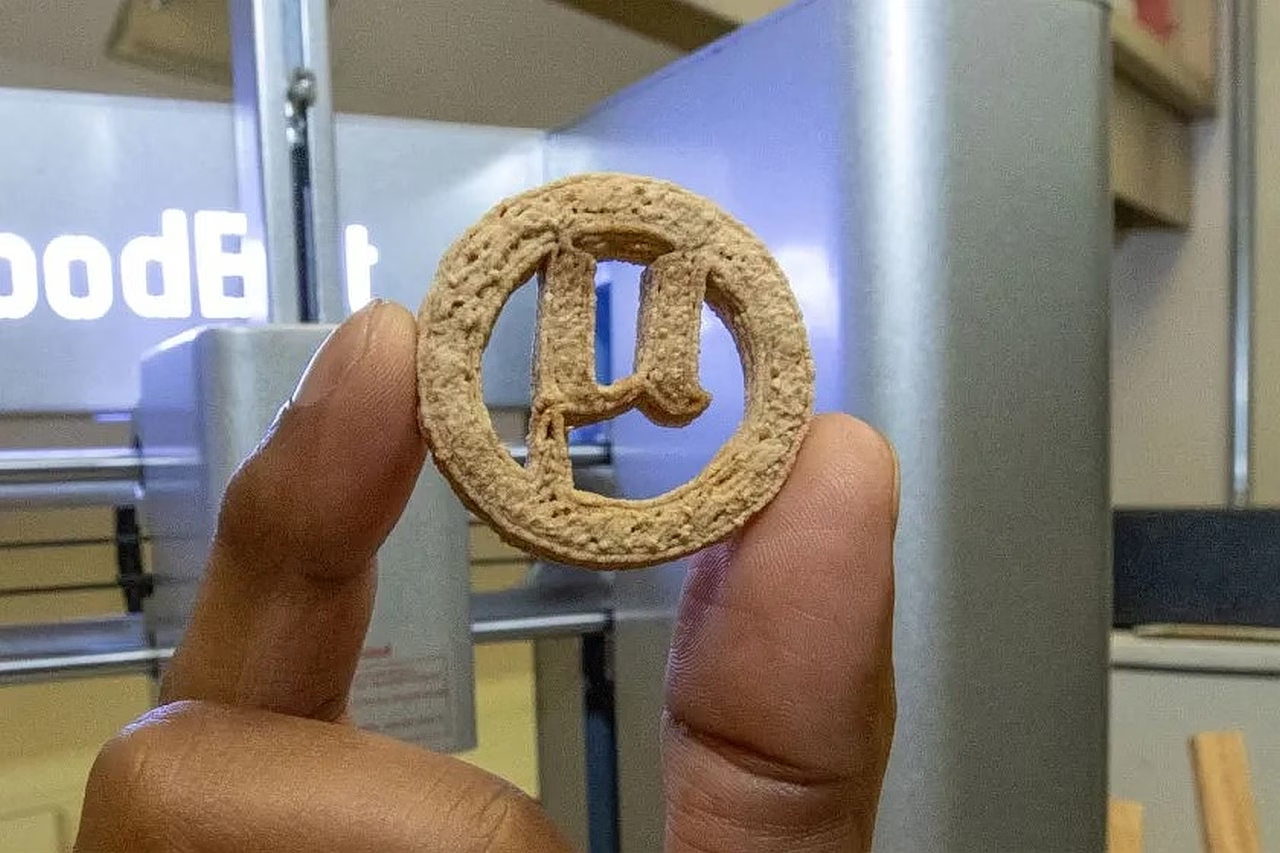
The fungi essentially act as biological factories, taking in raw waste and producing valuable aromatic molecules that can then be incorporated into food products. In demonstration trials, these bio-derived compounds were successfully used as flavoring agents in biscuit production, yielding products with a recognizable vanilla taste.
The Role of Agricultural Biomass
Alongside plastic bottles, agricultural straw — the dry stalks left behind after harvests of crops such as wheat, barley, or rice — serves as a second feedstock in this biotechnological process. Straw is classified as lignocellulosic biomass, meaning it is composed primarily of cellulose, hemicellulose, and lignin. These are complex carbohydrate and aromatic polymer structures that are notoriously difficult to break down using conventional methods.
The engineered fungi, however, are equipped with enzymatic tools that allow them to deconstruct these tough plant polymers. The breakdown of lignin, in particular, can yield aromatic precursors that serve as building blocks for vanillin synthesis. This dual-feedstock approach means that the technology can simultaneously address two distinct waste streams, potentially maximizing resource efficiency in industrial settings.
Agricultural straw is generated in the hundreds of millions of tonnes annually across the globe, and while some of it is repurposed as animal fodder or used in construction materials, a large portion remains underutilized. Integrating it into a food-grade production pipeline could offer farmers and agribusinesses a new revenue stream while simultaneously reducing the environmental burden of crop residue management.
Implications for Plastic Waste and the Food Industry
The scale of global plastic pollution is well documented. Billions of plastic bottles are discarded each year, and despite recycling initiatives, a substantial portion ends up in the environment, contributing to long-term ecological damage. Technologies that can convert plastic waste into something useful — particularly something as high-value as a food flavoring compound — could create economic incentives for improved plastic collection and processing infrastructure.
From the food industry's perspective, the development is particularly noteworthy. Vanilla is one of the most popular and widely used flavors in the world, yet natural vanilla remains one of the most expensive spices on the market, due largely to the labor-intensive cultivation of vanilla orchids and their geographic sensitivity. The synthetic alternative, vanillin derived from petrochemical sources, has long dominated the market but faces growing consumer scrutiny amid broader preferences for natural and sustainably produced ingredients.
A biologically produced vanillin derived from waste materials could occupy a compelling middle ground — cost-effective like synthetic vanillin, yet produced through a more environmentally conscious process. Labeling and regulatory frameworks would, of course, need to evolve to accommodate such novel production pathways before widespread commercial adoption could occur.
Scientific and Ethical Considerations
While the technology is scientifically promising, it also raises questions that will need to be addressed before consumer products reach supermarket shelves. Food safety regulators in various countries will need to evaluate whether compounds produced through genetically modified fungi meet existing safety standards for human consumption. The use of genetically modified organisms (GMOs) in food production remains a sensitive topic in many regions, particularly in Europe, where regulatory scrutiny is especially rigorous.
Additionally, scientists and ethicists will need to consider the long-term implications of normalizing the use of waste-derived compounds in food production. Questions about supply chain transparency, consumer informed consent, and the environmental impact of scaling up fungal bioprocessing facilities are all areas that warrant careful examination.
That said, proponents of the technology argue that the environmental benefits alone justify serious investment and research. Diverting plastic waste and agricultural residues from landfills and converting them into useful food-grade materials represents a textbook application of circular economy principles — a framework in which waste from one process becomes the raw material for another.
Looking Ahead
The research is still in relatively early stages, and significant technical, regulatory, and commercial hurdles remain before vanilla-flavored biscuits made from repurposed plastic and straw become a mainstream reality. However, the proof-of-concept results are encouraging, and they illustrate the broader potential of synthetic biology and metabolic engineering to address some of the most pressing environmental challenges of our time.
As biotechnology continues to advance, innovations like this one challenge conventional assumptions about what constitutes a raw material and where food ingredients can come from. If successfully scaled and approved for widespread use, this technology could contribute meaningfully to reducing plastic pollution, lowering the carbon footprint of food production, and creating new value from materials that are currently considered waste.
The intersection of environmental science, microbiology, and food technology reflected in this research points toward a future where sustainability and culinary innovation are not competing priorities, but complementary ones.