Death Toll Rises as Rescue Efforts Continue
Indonesian authorities have confirmed that the number of fatalities resulting from a major earthquake that struck the eastern part of the country has climbed to 100. The announcement was made on Monday by the head of the national disaster management agency, as search and rescue teams pressed on with their relief operations for the tenth day in a row.
The death toll increased after a number of injured individuals who had been receiving medical treatment succumbed to their wounds. According to disaster management chief Suharyanto, who addressed the media during a press conference, the total number of injured has now surpassed 1,600 people. The scale of the disaster continues to grow as officials piece together the full extent of the destruction across affected communities.
A Devastating 7.7-Magnitude Quake
The earthquake, which registered a magnitude of 7.7, struck the province of East Nusa Tenggara on August 15. The initial tremor was followed by thousands of aftershocks that compounded the destruction across the region, leaving behind a trail of widespread damage that has overwhelmed local infrastructure and emergency response capabilities.
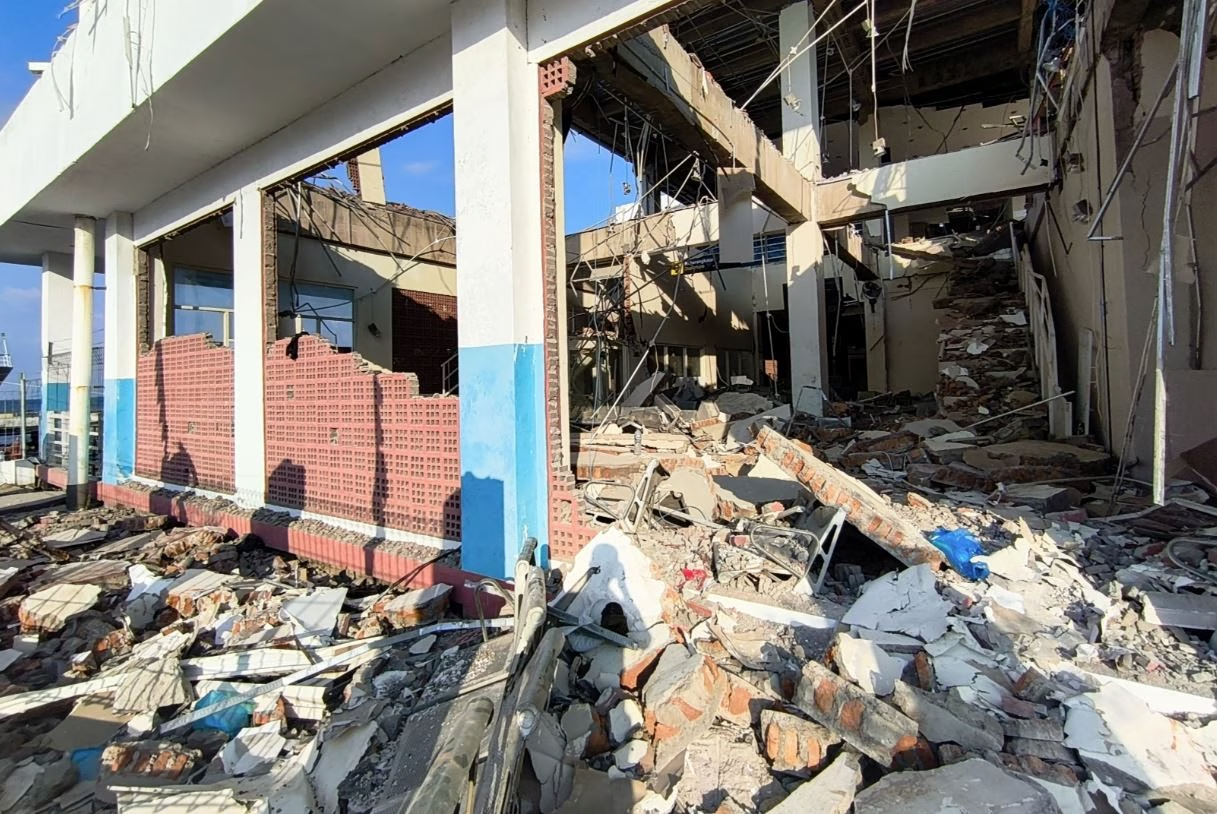
The impact on residential areas has been severe. More than 73,000 homes were damaged or destroyed as a direct result of the earthquake and its subsequent aftershocks. The scale of the destruction forced authorities to evacuate approximately 180,000 residents from their homes, many of whom remain displaced and dependent on emergency assistance.
Humanitarian Aid Delivered by Air, Road, and Motorcycle
Authorities have mobilized a broad range of resources to ensure humanitarian aid reaches those in need across the affected areas. Suharyanto noted that relief supplies are being distributed through a combination of helicopters, trucks, and motorcycles — a multi-modal approach necessitated by the challenging terrain and damaged road networks that make some communities difficult to access by conventional means.
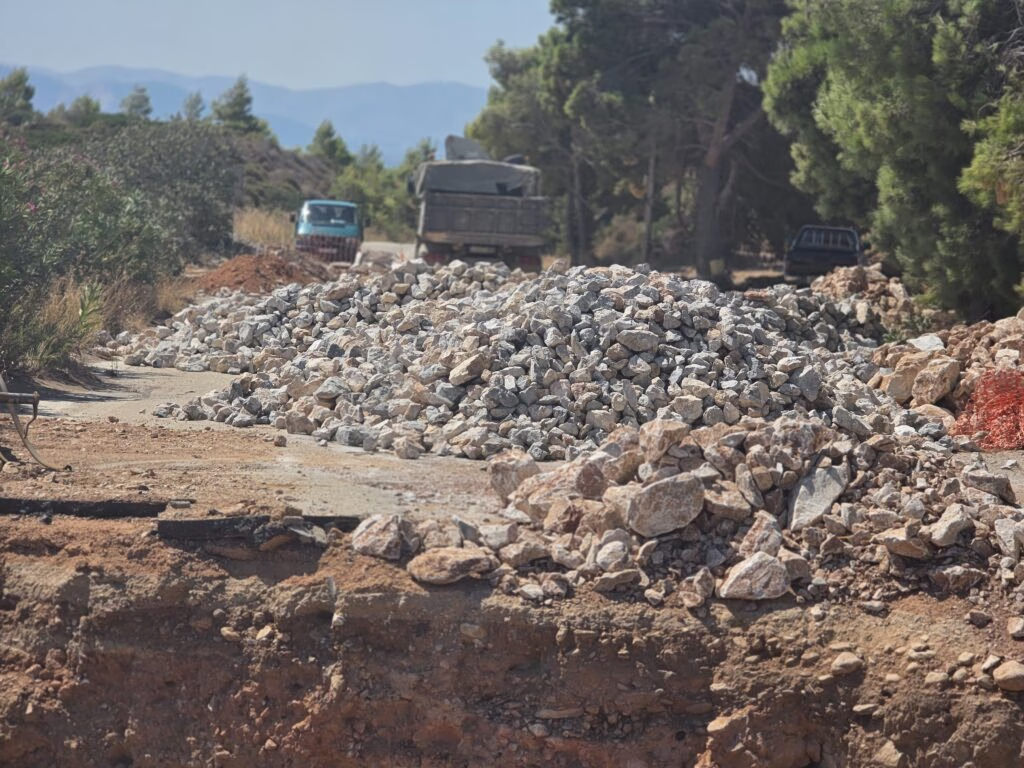
The logistics of aid delivery have posed significant challenges for responders, particularly in more remote or mountainous areas where infrastructure damage has been extensive. Rescue teams continue to work under difficult conditions as they attempt to locate survivors and provide emergency supplies to those who remain cut off from assistance.
Deadliest Quake to Hit Indonesia Since 2022
Officials have described the August 15 earthquake as the deadliest to affect Indonesia since a 2022 disaster in which a magnitude 5.6 quake with a shallow focal depth killed hundreds of people in West Java. Despite being significantly smaller in magnitude, that earlier earthquake caused catastrophic damage due to its proximity to densely populated areas and its shallow depth, which amplified the intensity of ground shaking at the surface.
The current disaster, affecting East Nusa Tenggara, has now surpassed that event in terms of confirmed fatalities, underscoring the vulnerability of the region's communities to seismic events and the ongoing challenges faced by authorities in managing large-scale natural disasters.
Indonesia's Persistent Vulnerability to Seismic Activity
Indonesia's geographic position makes it one of the most earthquake-prone nations on the planet. As an archipelago of more than 290 million people, the country sits along the Pacific Ring of Fire — a vast and seismically active belt that encircles much of the Pacific Ocean. This zone is defined by the convergence of multiple tectonic plates, whose movement generates frequent earthquakes and volcanic eruptions.
The country has experienced numerous significant seismic events throughout its history, and the frequency and intensity of such disasters continue to test the resilience of both local communities and national emergency management systems. Scientists and disaster preparedness experts have long emphasized the importance of earthquake-resistant construction, early warning systems, and robust evacuation planning in a country so exposed to natural hazards.
Ongoing Operations and the Road to Recovery
As rescue operations continue into their second week, the focus is gradually shifting from immediate search-and-rescue efforts toward broader relief and recovery work. Tens of thousands of displaced residents remain in temporary shelters, and the task of rebuilding more than 73,000 damaged homes represents a massive logistical and financial undertaking that will take months if not years to complete.
International attention has been drawn to the disaster, and relief organizations are monitoring the situation closely. The Indonesian government is expected to provide further updates on both the humanitarian response and longer-term reconstruction plans as the situation continues to evolve. For now, the priority remains ensuring that all affected communities have access to food, clean water, medical care, and shelter in the days and weeks ahead.