Fuel Pumps as Economic Indicators
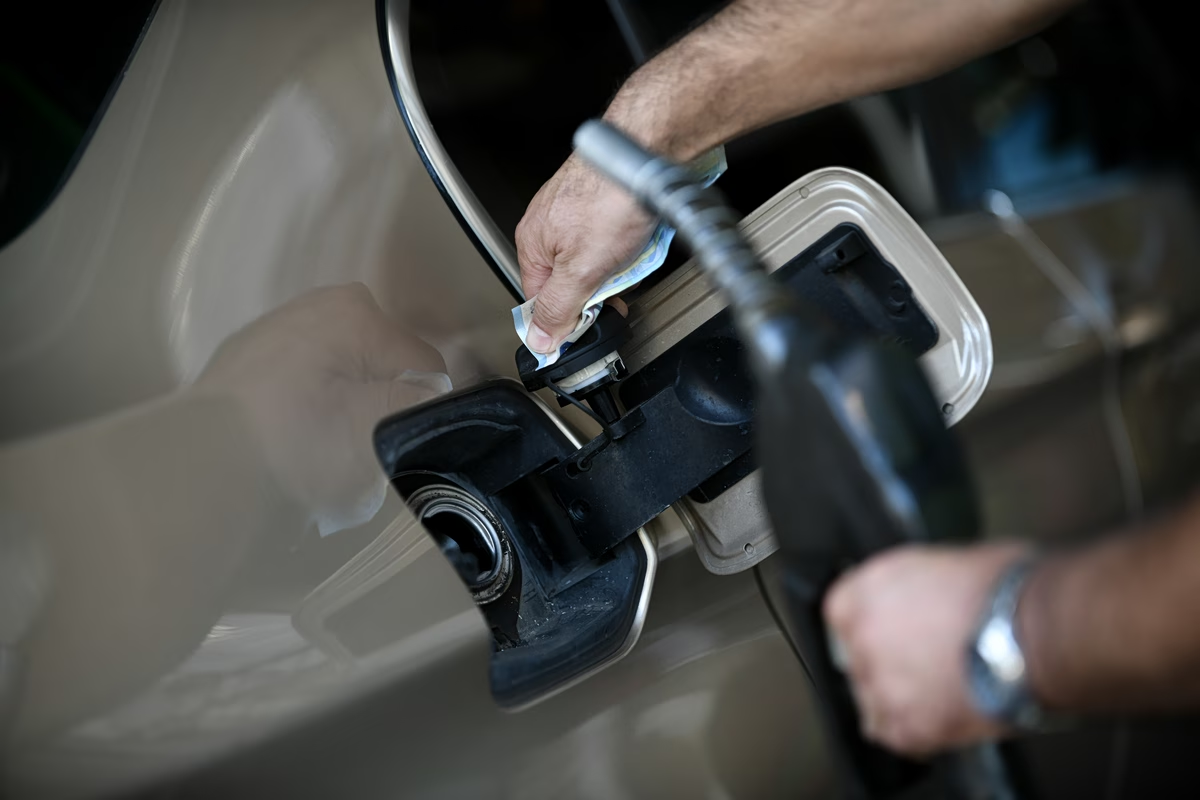
As summer draws to a close, one of the most revealing sources of economic data has not come from government reports or central bank analyses, but from fuel pumps across Greece. Consumption figures recorded during the peak holiday season have shed considerable light on the financial strain experienced by Greek households, pointing to a pattern of constrained mobility and changing consumer priorities driven by the ongoing cost-of-living crisis.
Economists and analysts have long recognized energy spending as a reliable proxy for broader economic activity. This summer, the data gathered at petrol stations across the country has served as a candid reflection of how rising prices are reshaping the everyday decisions of ordinary families.
Reduced Travel and Shifting Holiday Plans
One of the clearest trends to emerge from the fuel data is a measurable decline in road travel during what is traditionally the busiest travel period of the year. Greeks who might previously have embarked on extended road trips to popular island gateways or remote mountain destinations appear to have scaled back significantly, either shortening their journeys or opting to stay closer to home.
For many families, the calculation has become straightforward: with fuel prices remaining elevated compared to pre-inflationary benchmarks, a long-distance holiday trip represents a substantially larger financial commitment than it did just a few years ago. This has prompted many households to rethink their summer plans entirely, choosing shorter excursions or foregoing private vehicle travel altogether in favor of public transportation options where available.
The Numbers Behind the Trend
While precise regional breakdowns continue to be analyzed, aggregate data indicates that overall fuel consumption during the core summer months showed signs of restraint relative to expectations based on historical seasonal patterns. This is notable given that summer typically represents the highest period of fuel consumption in Greece, driven by both domestic tourism and the movement of people to and from popular holiday destinations.
Industry observers note that the restraint in consumption cannot be attributed solely to behavioral change. Higher pump prices mean that the same financial outlay results in less fuel purchased, creating a compounding effect on household budgets. Families are not only paying more per liter but are also having to make harder choices about when and how far they drive.
Consumer Behavior Under Pressure
The fuel data aligns with a broader pattern of consumer retrenchment that has been documented across various sectors of the Greek economy throughout the year. Spending on non-essential goods and services has shown signs of compression, while households have increasingly prioritized essential expenditure. The summer holiday, a deeply ingrained cultural tradition in Greece, has not been immune to these pressures.
Survey data collected alongside economic indicators suggest that a significant share of Greek families either reduced the duration of their summer vacation, chose less expensive destinations, or allocated a smaller overall budget to holiday-related spending. For some, the annual trip to the family village or a beloved island retreat has been replaced by day trips or stays at more accessible, lower-cost locations.
The Cultural Weight of the Greek Summer
Understanding the significance of these shifts requires some appreciation of what the summer holiday means within Greek culture. For generations, the August break has been a near-sacred institution, with families planning months in advance for extended stays at coastal or rural retreats. The willingness to curtail or modify these plans speaks volumes about the depth of financial pressure being felt across income groups.
The changes are not confined to lower-income households. Middle-class families, who have historically been the backbone of domestic tourism, are also reporting that they have had to make compromises this year. Whether it is choosing a closer destination, reducing the number of nights away, or cutting back on dining and leisure activities during the trip, the effects of elevated prices have touched a wide cross-section of Greek society.
Energy Prices and Household Budgets
Greece, like much of Europe, has navigated a prolonged period of elevated energy costs over recent years, stemming from a combination of global supply disruptions, geopolitical tensions, and structural factors within energy markets. While some relief has been seen in wholesale prices, retail fuel costs have remained stubbornly high for consumers, with the gap between wholesale and pump prices drawing periodic scrutiny from regulators and consumer advocacy groups.
Government measures aimed at cushioning the impact of high energy prices have had varying degrees of effectiveness. Subsidies and targeted support programs have provided some relief for vulnerable households, but a significant portion of the population has continued to bear the full weight of elevated costs when filling up at the pump.
Looking Ahead: Long-Term Changes in Travel Patterns
Some analysts suggest that the behavioral shifts observed this summer may not be entirely temporary. If sustained periods of high living costs continue to influence how Greeks approach their holidays, there could be lasting structural changes in domestic tourism patterns, with implications for regional economies that depend heavily on summer visitor spending.
Smaller towns and villages that rely on the influx of Greek holidaymakers during August could feel the impact of reduced visitor numbers or lower per-visitor spending over time. Tourism operators in popular domestic destinations have already reported a more cautious consumer this season, with shorter booking horizons and greater price sensitivity than in previous years.
A Broader Reflection of Economic Realities
Ultimately, the story told by Greece's fuel pumps this summer is one that extends well beyond petrol prices. It is a snapshot of an economy in which many households are navigating genuine financial difficulty, making daily trade-offs that affect everything from their commuting habits to their most cherished seasonal traditions. The data serves as a concrete, if sobering, measure of how the cost-of-living crisis is being lived out at the most personal level — in the decision of whether or not to fill the tank and hit the road for the annual summer escape.
As policymakers, economists, and businesses continue to assess the economic landscape heading into the autumn, the summer fuel consumption figures offer a data point that is difficult to dismiss: rising prices are changing behavior, and the effects are visible in some of the most fundamental aspects of Greek daily life.