Unexploded Shell Detonates During Samos Wildfire Near Former Military Range
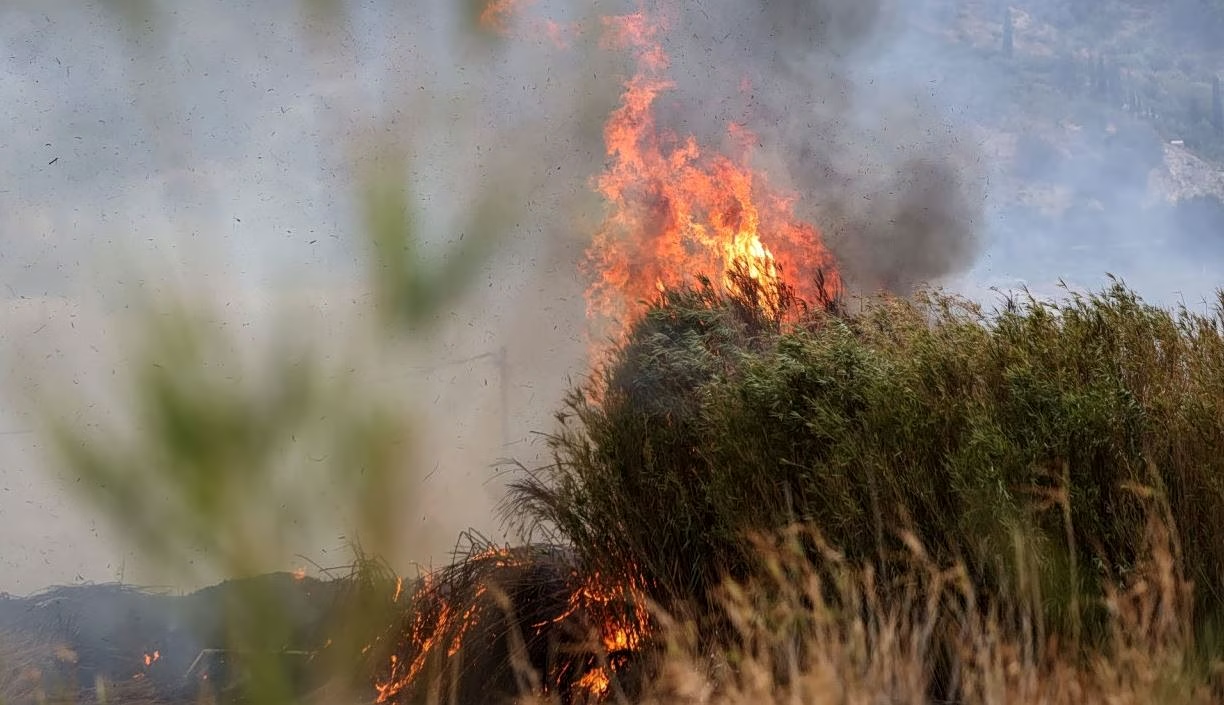
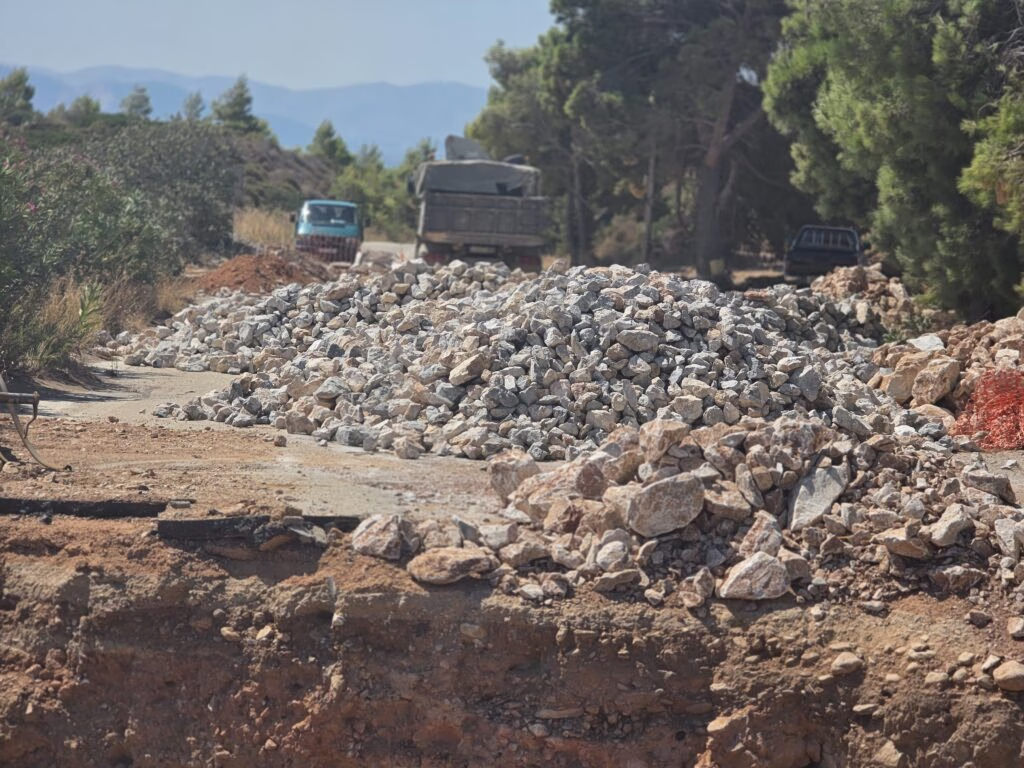
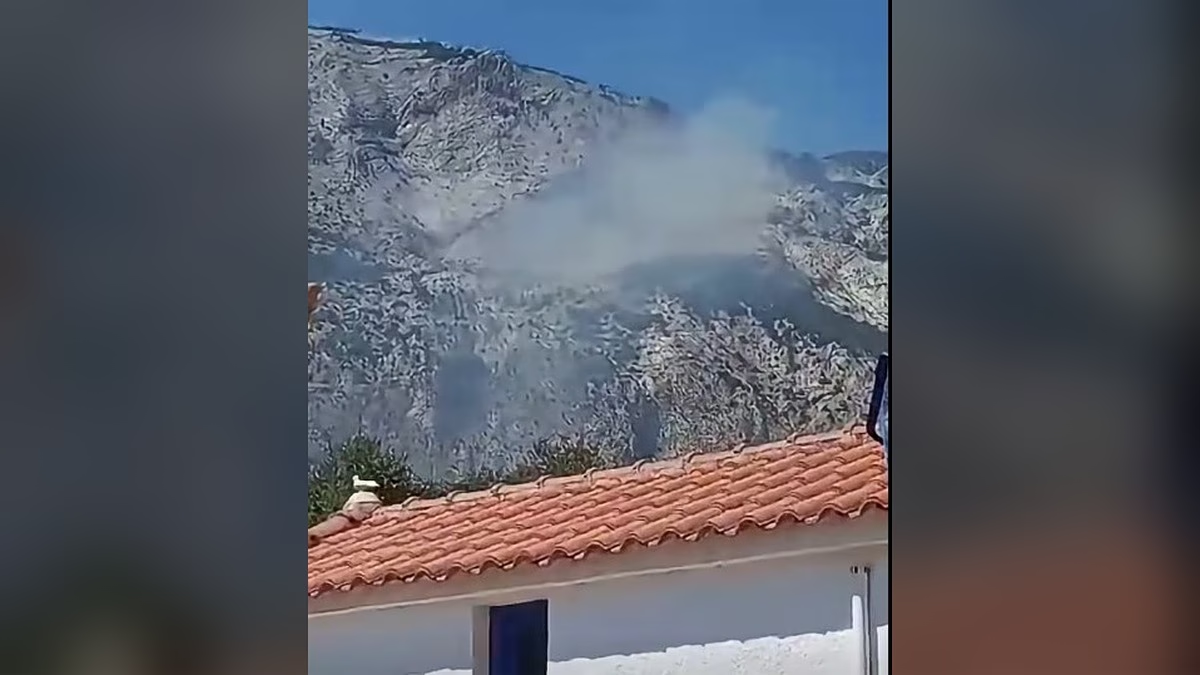
Dramatic footage captured during a wildfire burning near the former artillery and ballistics testing range in the Marathokampos area of the Greek island of Samos has recorded the precise moment an unexploded military shell detonated as fire swept through the surrounding terrain. The incident drew significant attention to the potential dangers posed by legacy munitions left behind at old military training sites when wildfires break out in their vicinity.
What the Footage Shows
The video document, which has been widely circulated following the fire, clearly shows the moment the shell ignited and exploded as the blaze engulfed the area around the disused military range. The sudden detonation, triggered by the intense heat of the advancing fire, produced a visible explosion that added an additional layer of danger to an already hazardous situation for emergency responders and any civilians in the surrounding area.
Authorities were immediately alerted to the detonation, and the footage has since been reviewed by relevant services to assess the scope of the incident and determine whether further unexploded ordnance may remain in the affected zone. The existence of residual munitions at former military testing ranges is a known concern in several parts of Greece, where old artillery fields have not always been fully cleared following the cessation of military activities.
Fire Contained: No Active Front Remaining
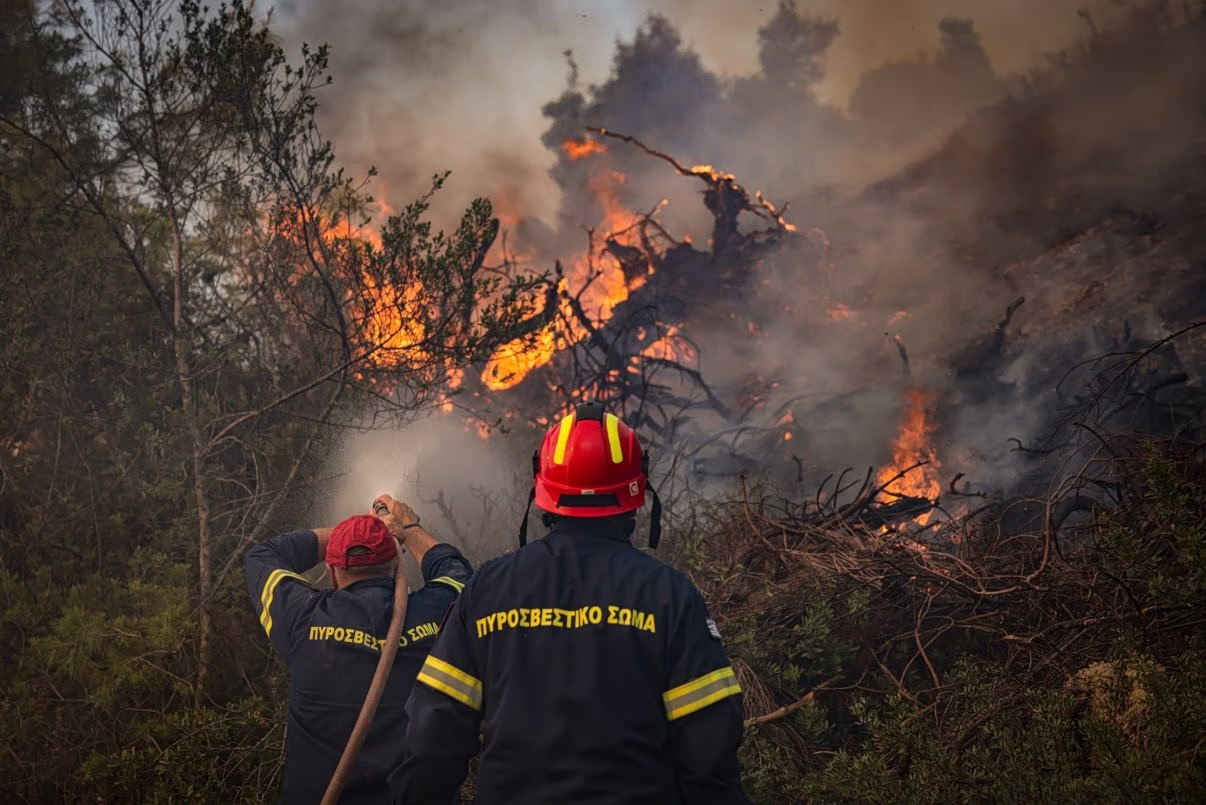
Despite the added complication of the shell detonation, firefighting teams working on the ground and supported by aerial resources were ultimately able to bring the wildfire under control. As of the latest reports, there is no longer an active fire front in the Marathokampos area, signaling a significant improvement in conditions on the island.
Firefighters, supported by water-dropping aircraft and ground crews, worked to contain the blaze and prevent it from spreading further into populated areas or ecologically sensitive zones on the island. The rugged and dry terrain typical of Samos during the summer months presented considerable challenges to containment efforts, as it does across much of the Aegean during the peak fire season.
Risks Posed by Legacy Munitions During Wildfires
The detonation of the unexploded shell has reignited discussion among authorities and public safety experts regarding the management of old military training sites across Greece. Former artillery ranges and ballistic testing fields, some of which have been inactive for decades, may still contain residual munitions that were never recovered or destroyed following the end of military operations.
When wildfires break out in or near such areas, the risk of accidental detonation becomes a serious concern. The combination of extremely high temperatures generated by forest fires and the presence of aging, potentially unstable ordnance creates a compound hazard that complicates firefighting operations and endangers the safety of both emergency personnel and nearby residents.
- Legacy munitions at old military ranges can detonate when exposed to extreme heat from wildfires
- Former artillery sites across Greece may not be fully cleared of unexploded ordnance
- Detonations in active fire zones create additional hazards for firefighting teams
- Authorities are urged to assess and remediate former military testing areas, particularly in fire-prone regions
Marathokampos and the Local Context
Marathokampos is a municipality located on the southwestern part of Samos, one of the larger Aegean islands situated close to the Turkish coast. The area is known for its mountainous landscape, olive groves, and relatively sparse population compared to the more tourist-heavy northern parts of the island. Like many parts of the eastern Aegean, the region is susceptible to wildfires during the hot, dry summer months, particularly when strong winds accompany periods of elevated temperatures.
The former military range in the area, which had been used for artillery and ballistic testing, has long been a locally known feature of the landscape. The fact that it may still contain unexploded ordnance is not entirely surprising given the historical pattern of military site management in Greece, but the incident has served as a stark reminder of the need for more systematic evaluation and clearance of such locations.
Response from Authorities
Local and regional authorities on Samos responded swiftly to the fire and the related detonation incident. Emergency services coordinated closely to ensure that the zone around the former military range was kept clear of unauthorized personnel while firefighting operations continued. The Greek Fire Service, which has faced an intense and challenging wildfire season across the country in 2025, deployed resources to the island as part of broader regional fire response efforts.
Officials have not yet issued a formal statement specifically addressing the long-term management of the former artillery range or the question of whether a comprehensive survey for remaining ordnance will be conducted. However, the incident is expected to prompt further scrutiny from both local authorities and national bodies responsible for public safety and land management.
Broader Wildfire Context in Greece
The Samos fire is part of a wider pattern of wildfire activity that has affected Greece during the summer season. Numerous fires have broken out across the Greek mainland and islands in recent weeks, straining firefighting resources and placing communities on high alert. Climate-related factors, including prolonged drought conditions and elevated temperatures, have contributed to an elevated fire risk across the Mediterranean region as a whole.
Greek authorities continue to urge citizens to exercise caution during high-risk fire weather conditions and to report any signs of smoke or fire immediately to emergency services. The combination of environmental pressures and legacy hazards such as unexploded ordnance underscores the complex and multifaceted nature of wildfire risk management in a country with a long military and geographic history.
The footage from Marathokampos serves as a powerful visual reminder that wildfires in certain areas carry risks that extend well beyond the flames themselves, with hidden dangers beneath the surface capable of escalating an already dangerous situation.